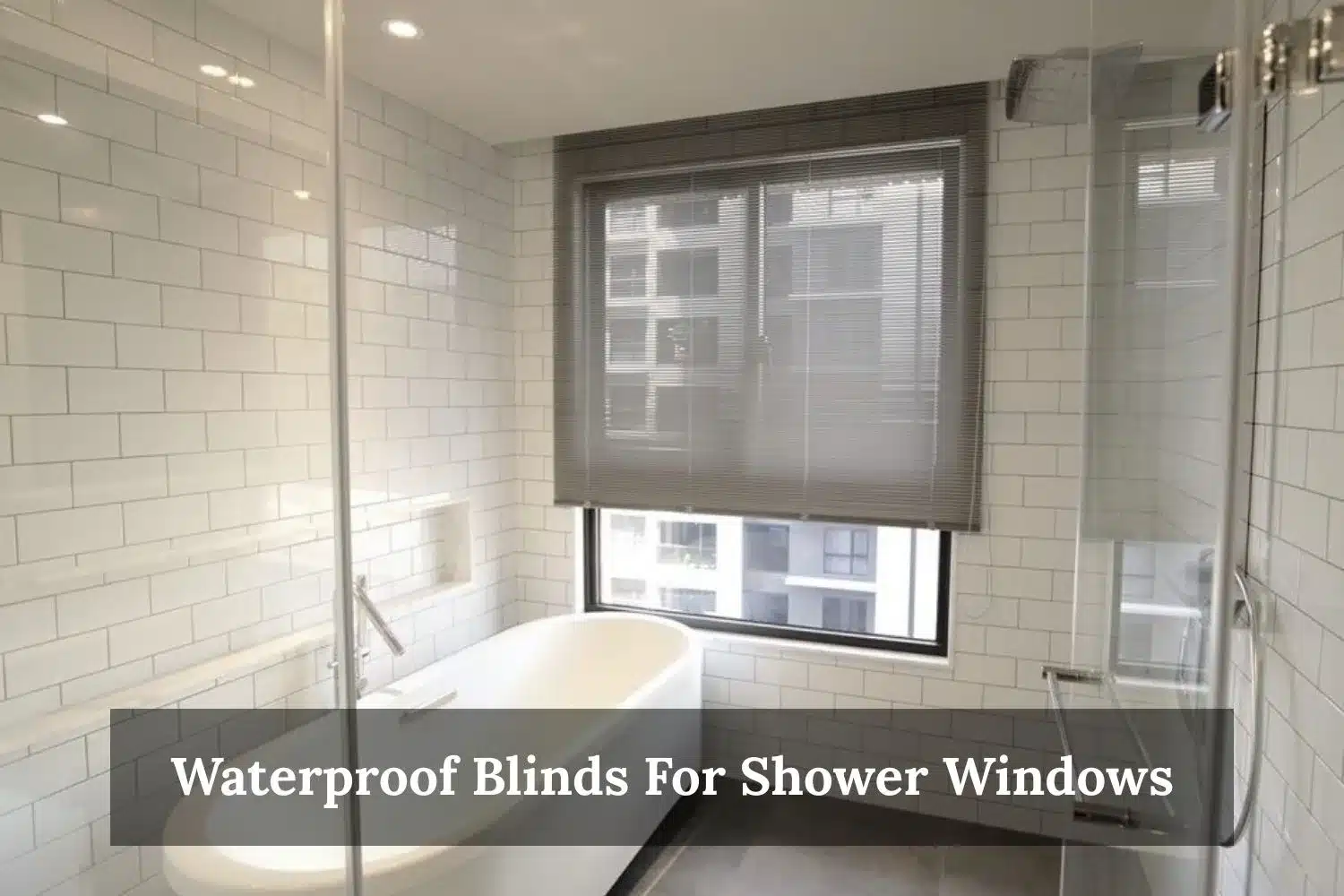

Don’t think that you have selected the most beautiful blind and your work is all done. The most attractive design will fail if you don’t do its property fitting. Blinds that are too wide will have trouble in opening & closing while narrow blinds will leave unwanted gaps that cause the light to seep through and affect the privacy. You need to measure blinds precisely based on your window frame to prevent these issues. Today, we will tell you exactly how to measure blinds for a perfect fit in this quick guide to Dubai homes.
Decide Between Inside and Outside Mounting
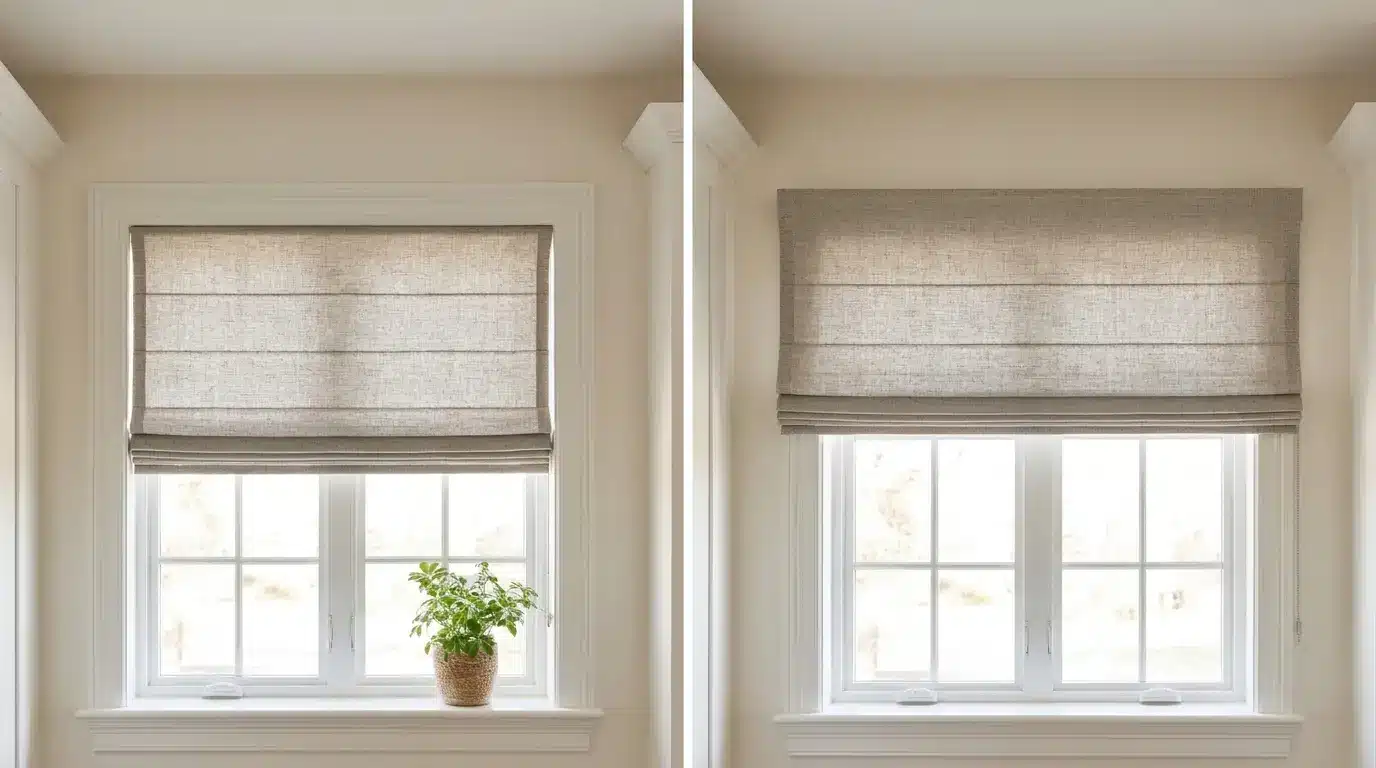
The first thing that you must determine is whether you need an inside the frame fitting or outside one. The inside mount will fit your blinds inside the window frame recess to offer a near appearance. This will work best for the recess that has sufficient depth and is square in shape. As for the outside mounting, the blind will be fitted above or outside your window frame to cover the entire opening and often will extend beyond its edges.
If you have an aluminum window frame, we recommend an inside mounting for a clean, simple appearance. For bedrooms, you can go for the outside mounting, a practical choice with limited light leakage issues.
Gather the Right Measuring Tools
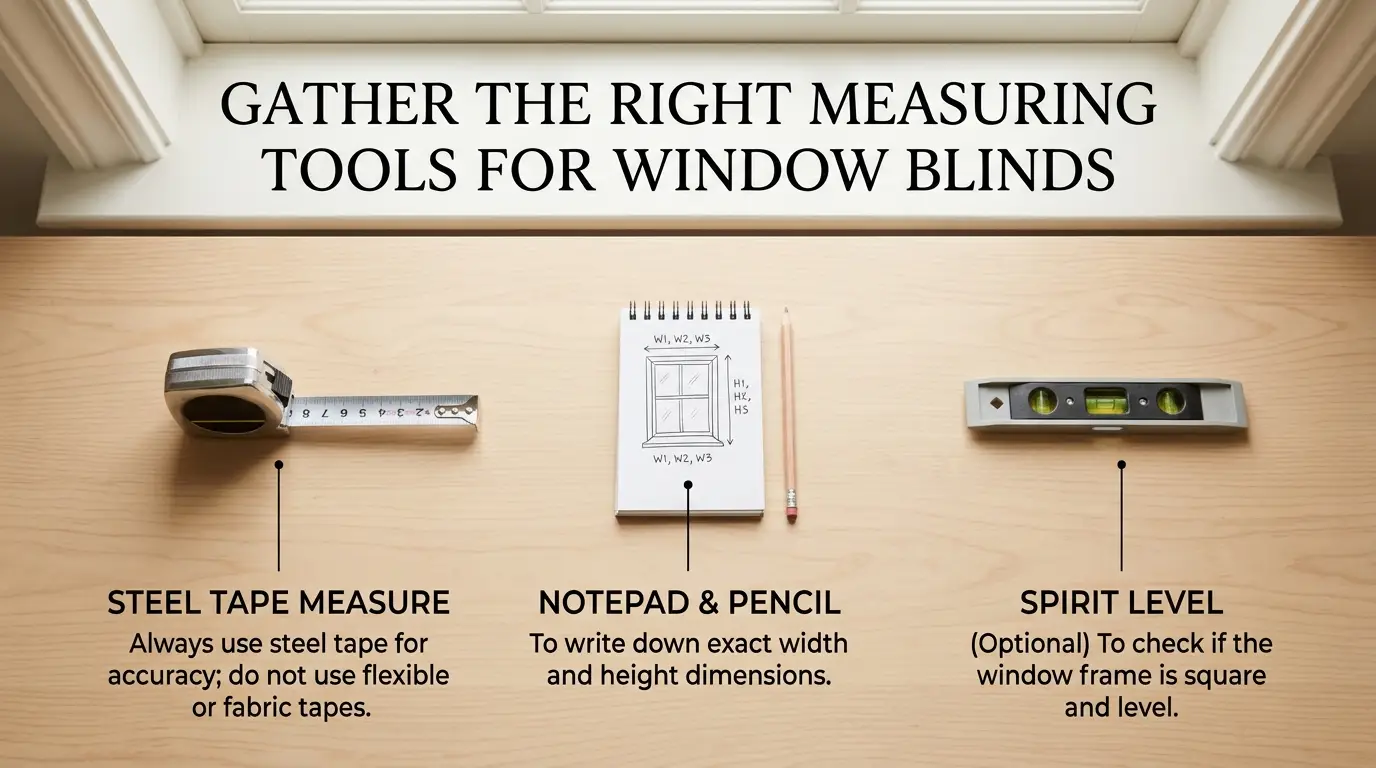
In order to get an accurate measurement, you need to start with the right tools. You won’t need an excessive toolkit, but one that helps you measure easily without any mistakes. Items you are going to need will be:
- A steel measuring tape
- A pencil
- A notepad
- A step ladder
- A spirit level
There would be places where you have to take measurements in millimeters, if it’s for custom-made blinds. Small differences in measurements will affect how the final product will look and function.
How to Measure for Inside-Mount Blinds? Steps To Follow
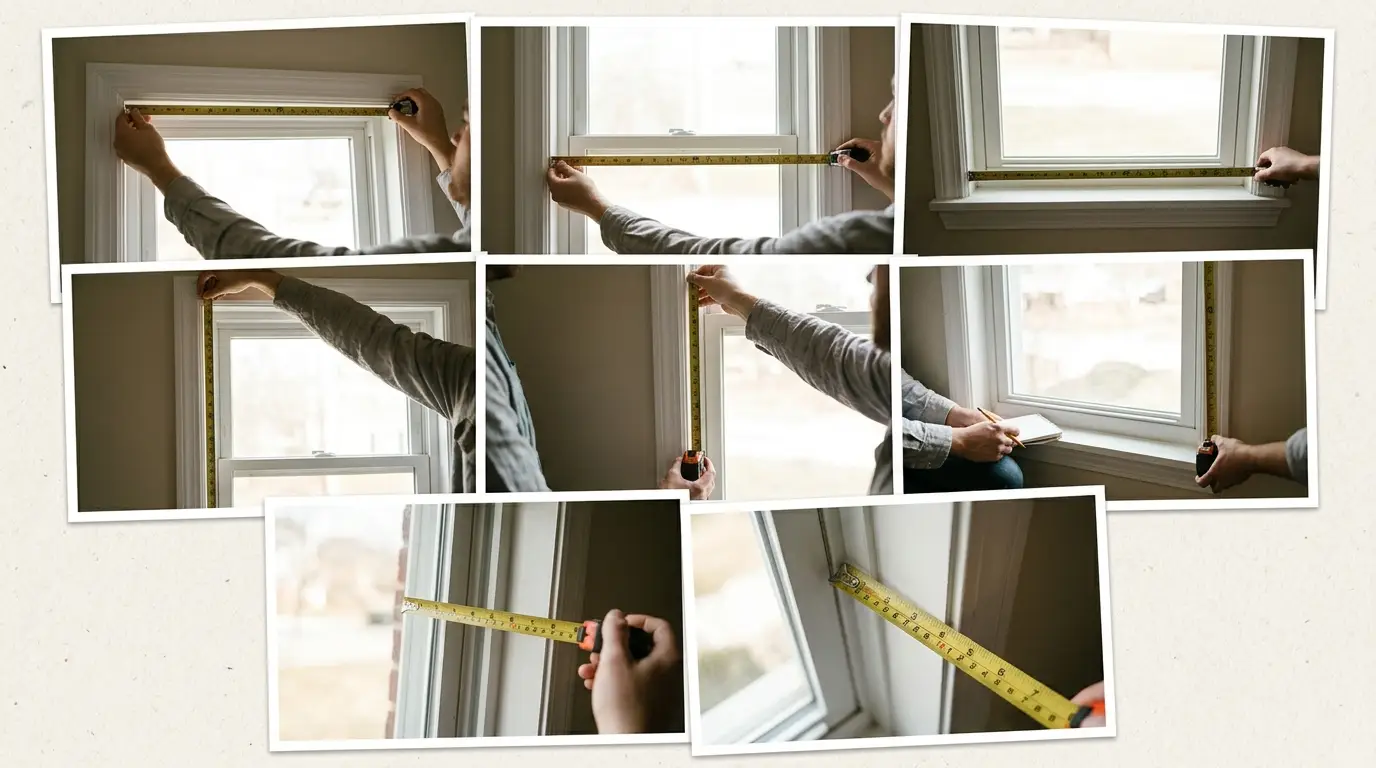
An inside mounting for blinds will need careful measurements because you have to fit blind inside the available recess.
Step 1: Measure the width
You should start by measuring the inside of the width at three points; near the top, across the middle part, and near its bottom.
You need to take all these points measurements because frames are not always square so the width will be a bit. For a standard inside mount blind, you need to use the smallest width measurement and apply right fitting allowance.
Step 2: Measure the height
You must measure the height from top of the recess to its window sill at three points; left, right, and the center. Take these three measurements and follow the blinds’ manufacturer’s instruction on which height to use, especially if the window frame is uneven.
Step 3: Check the recess depth
You just measure the depth from the front edge of your window’s recess to the glass or any other obstruction behind it. This is important because all the things like headrail, brackets, and operating mechanism will need clearance for a correct fitting. Its best to factor in handles, hinges, and ventilation options of your window, so they won’t interfere with your blind.
How to Measure for Outside-Mount Blinds? Steps To Follow
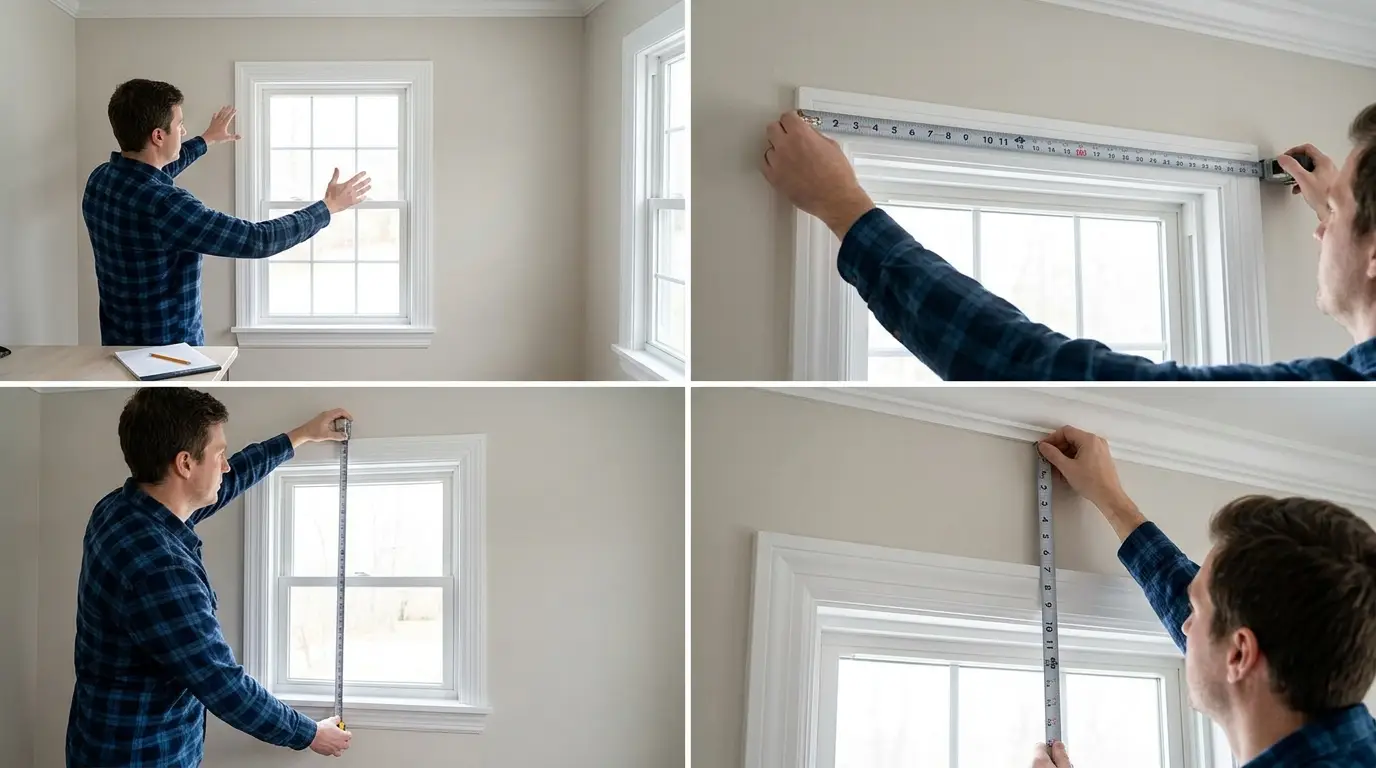
An outside blinds mounting will cover a large area compared to the actual window opening. They are ideal for when you want to reduce the side light gaps or when the window recess doesn’t need an installation depth.
Step 1: Decide the coverage area
You need to know exactly how far beyond the frame the blind will extend and it will depend on the amount of light coverage and the wall space.
Step 2: Measure the width
You must measure the total width of the area you want your blind to cover along with the planned overlap on both sides. Make sure the width doesn’t interfere with nearby walls, switches, or other side windows.
Step 3: Measure the height
You must take the measurement form the first bracket position to the desired bottom point. For a bedroom, you might need to extend your blind a bit below the window opening to minimize its light gaps.
Step 4: Check installation clearance
Inspect the wall above your window and confirm that these brackets are fixed securely. Check for curtain tracks, decorative moldings, and other obstructions. The overall blind width and the width of fabric can differ due to the operating mechanism and brackets.
Measuring Different Types of Blinds
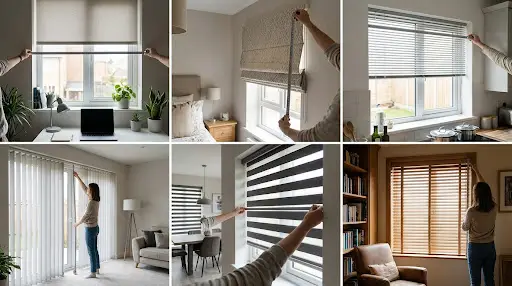
Not every kind of blind will have the same exact measurement method. The type of blind mechanism, its fabric arrangement, and the mounting option will affect the dimensions taken.
- A roller blind will need you to account for recess depth, bracket clearance, and fabric coverage
- A roman blind will require space for the headrail and folded fabric stack
- For a venetian blind, you need to check the depth for slats, headrail, and operating mechanism
- A vertical blind will have you measure the full drop and check the stacking direction
- A zebra blind will need you confirm the clearance for fabric alignment and the operating mechanism
- A wooden blind will need you to check for slat depth, weight, and the mounting support
Common Measuring Mistakes to Avoid
Even a small error in the measurement can affect the overall installation finish. These are some common mistakes you must avoid:
- Always measure the width & height at different points as not every window is a perfect square.
- Its best to write each dimension clearly and label it as well.
- Never ignore obstructions like hinges, handles, or air vents as it will affect the window opening & closing.
- You must measure each opening separately even when the window appears to have similar dimensions.
Final Thoughts
You can only get a neat blinds appearance if you do a correct blinds measurement. Doing so will also help to achieve smooth operation and a proper window coverage. Whether it’s a roller, roman, vertical, venetian, wooden, or a zebra blind; the process will start with your choice of mounting style. Take your time to measure every window individually and follow the instruction of blinds manufacturer. One recommendation is to hire a professional blinds installation service provider in Dubai to prevent any costly mistake.